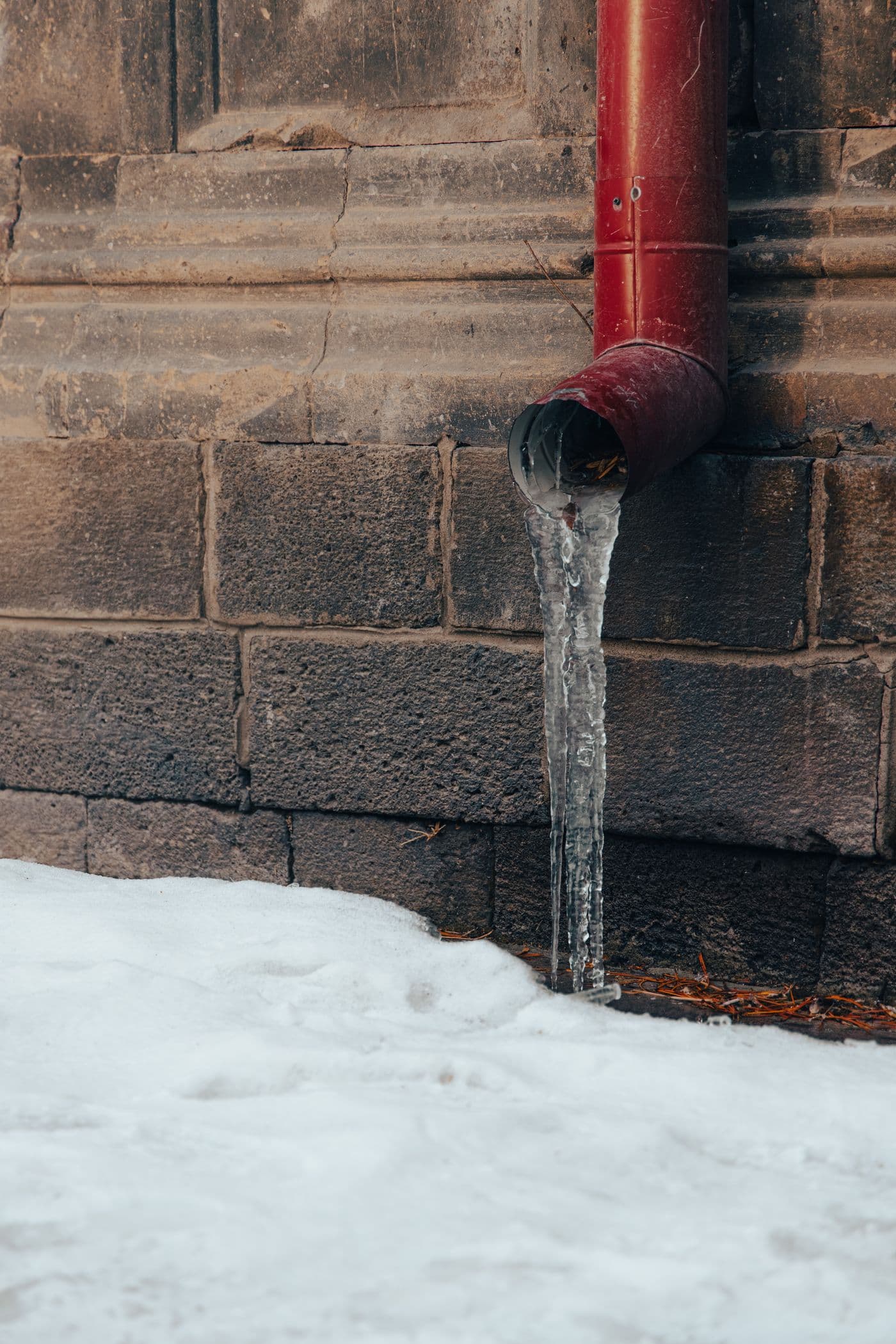
What a hard cold snap does to Kent pipes
Most homes around Puget Sound were built for mild, damp weather, not deep cold. Water pipes often run through crawl spaces, attics, and exterior walls with little insulation, because for most of the year they do not need it. Then a cold snap holds temperatures below freezing for a few nights. The water inside an exposed pipe freezes, and the ice expands. That expansion splits the pipe, often a copper or plastic water supply line feeding a faucet, sink, shower, water heater, or appliance. Older pipes weakened by corrosion tend to give out first, and the outdoor faucets and lines nearest the cold are the usual weak points.
You may not notice until it thaws. When it does, water under full house pressure pours out, sometimes many gallons a minute, into a wall, a ceiling, or straight down into the basement.
The moment a pipe lets go
Speed matters more than anything else here. Safety comes first, then do these steps in order:
- Shut off the water. Close your home's main shutoff valve, the one water valve that stops the flow to the whole house. Then open a low faucet to drain the water still sitting in the lines.
- Cut the power if needed. Water and electricity are a dangerous combination. If water is near outlets, electronics, or the electrical panel, switch off the breaker to that area before you touch anything wet.
- Catch what you can. Buckets, towels, a wet vacuum, and moving furniture clear of the water all buy time and protect your property.
- Call for help. A local crew starts water removal and drying. The burst pipe itself is repaired by a licensed plumbing professional; the crew we connect you with handles the water damage. The crews take burst-pipe calls 24/7.
Finding the water you cannot see
A burst pipe rarely soaks only where you first find it. Water runs downhill inside walls and ceilings, pools on floors, and drips into the crawl space below, so a pipe that let go in the attic can turn up as a basement flood, since water finds the lowest point in many Kent basements. The crew uses moisture meters to trace the water through wall cavities and under floors, not just where the stains are visible.
Some pipe problems warn you before they burst. Warning signs worth mentioning on the call include water stains or discoloration on a ceiling, whistling or banging noises in the walls, rust-colored water at your faucets or fixtures, a drop in water pressure, or a water bill that jumped with no change in usage. Any of those sounds can mean small leaks are already running somewhere you cannot see, and the longer they run, the bigger the repairs.
If a pipe is frozen but has not burst yet
Sometimes you catch it in time. On a hard cold morning, a faucet that only trickles, or fixtures that give no water at all, often means a pipe is frozen but has not split yet. Act with care:
- Open the faucet. Leaving it open gives melting water somewhere to go and eases the pressure that causes burst pipes.
- Warm the pipe gently. A hair dryer or a space heater near the frozen section helps. Never use an open flame, both for safety and fire risk.
- Keep your shutoff handy. A frozen pipe can crack as it thaws, so keep your main valve within reach in case it lets go.
If you are not sure which line is frozen, or the pipe is out of reach in a wall, those are good questions for a plumber, and the crew can point you the right way on the call.
Why acting fast matters
Standing water warps floors and swells baseboards by the hour. A slow leak inside a wall can rot framing, weaken the structure, and feed mold for weeks before you notice, and mold growth can start within 24 to 48 hours of the wood staying wet. A sudden burst pipe is usually a covered loss, so the crew photographs and logs every wet area, giving you photos as evidence for the insurance claim. The faster drying starts, the smaller the repair bill. A few simple prevention tips help too: insulate the exposed pipes in your crawl space, and learn where your main valve is before you ever need it. Then call the moment water appears, day or night.